Sex and communication
Communication is important in any type of relationship, whether it’s romantic, sexual or platonic.
Sex doesn’t have to be a part of every relationship. If you don’t want to have sex, that’s okay. Let your partner(s) know that your decision not to have sex does not affect how you feel about them. Be clear about what you do want: tell your partner(s) what types of affection you’re comfortable with.
Communication for pleasure
Asking for what you want or admitting that you don’t like something can be difficult, but communication is often the key to a pleasurable experience. Constructive feedback can be sexy! It doesn’t indicate that anyone is “bad” at sex. Everyone has unique wants and needs.
Here are some phrases you can try:
- “Can we do more of ___ instead of ___?”
- “Can we try ___?”
- “That doesn’t feel good to me.”
- “I don’t feel comfortable with ____, can we ____ instead?”
Want/Will/Won’t
One way to start up a conversation is to make a “Want/Will/Won’t” chart. Fill in sexy things you “want” in the want column, things you’d like to try in the “will” column, and things you aren’t comfortable with in the “won’t” column.
Compare charts with your partner(s) and live out your sexual fantasies while knowing and respecting each other’s boundaries.
Birth control and STIs
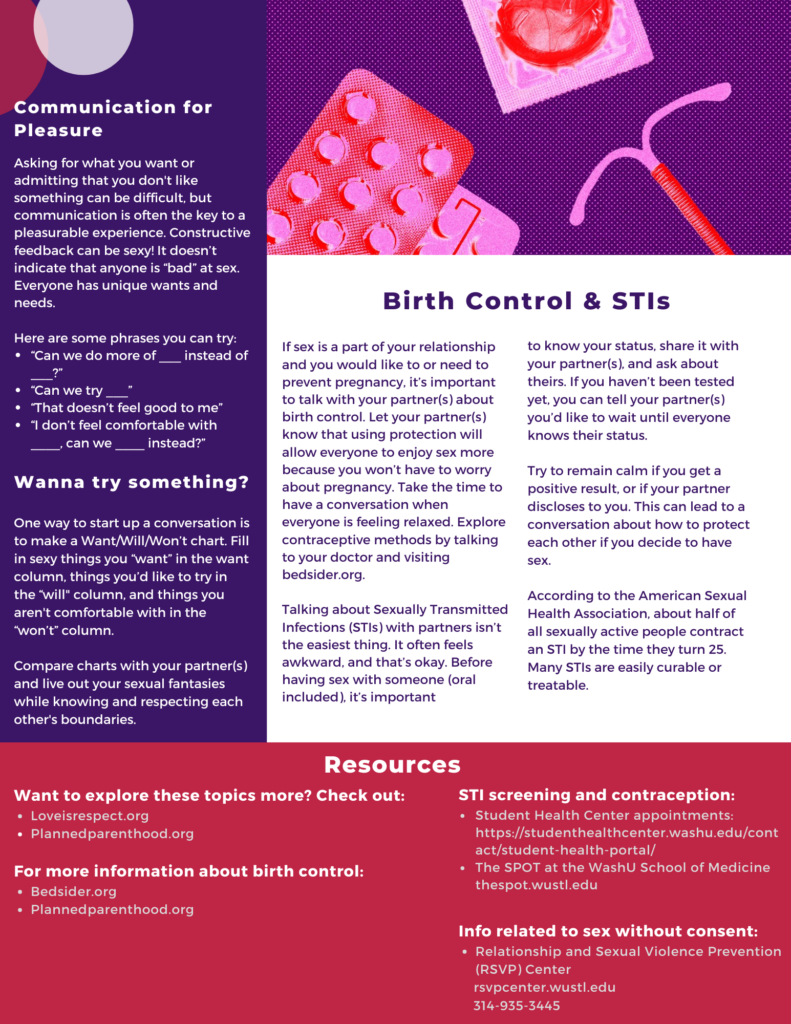
If sex is a part of your relationship and you would like to or need to prevent pregnancy, it’s important to talk with your partner(s) about birth control. Let your partner(s) know that using protection will allow everyone to enjoy sex more because you won’t have to worry about pregnancy. Take the time to have a conversation when everyone is feeling relaxed. Explore contraceptive methods by talking to your doctor and visiting bedsider.org.
Talking about Sexually Transmitted Infections (STIs) with partners isn’t the easiest thing. It often feels awkward, and that’s okay. Before having sex with someone (oral included), it’s important to know your status, share it with your partner(s), and ask about theirs. If you haven’t been tested yet, you can tell your partner(s) you’d like to wait until everyone knows their status.
Try to remain calm if you get a positive result, or if your partner discloses to you. This can lead to a conversation about how to protect each other if you decide to have sex.
According to the American Sexual Health Association, about half of all sexually active people contract an STI by the time they turn 25. Many STIs are easily curable or treatable.
Resources
Explore these topics more:
- Loveisrespect.org
- Plannedparenthood.org
- GYTnow.org
- BareMail – Free safer sex supplies
More info about birth control:
Make an appointment:
- The Student Health Center – Danforth Campus
- The SPOT (WashU School of Medicine)