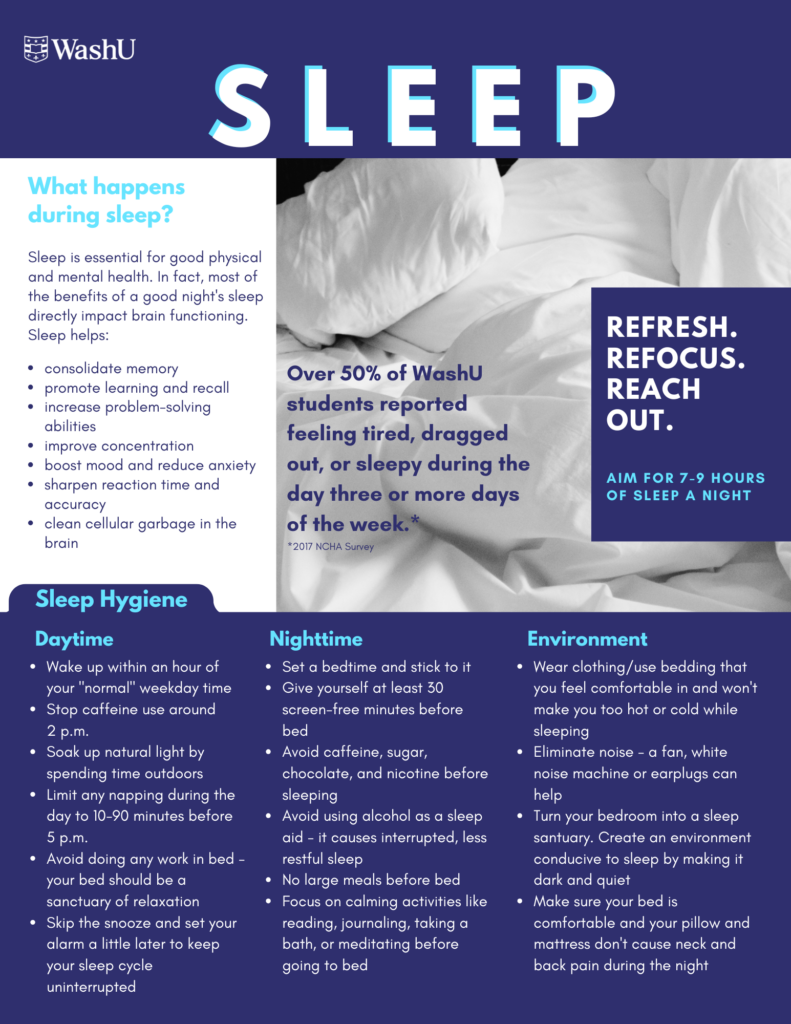
Aim for 7-9 hours of sleep a night. Sleep is essential for good physical and mental health.
In fact, most of the benefits of a good night’s sleep directly impact brain functioning. Sleep helps you:
- consolidate memory
- promote learning and recall
- increase problem-solving abilities
- improve concentration
- boost mood and reduce anxiety
- sharpen reaction time and accuracy
- clean cellular garbage in the brain
Over 50% of WashU students reported feeling tired, dragged out or sleepy during the day three or more days of the week.
2017 NCHA Survey
Sleep Hygiene
Daytime
- Wake up within an hour of your “normal” weekday time
- Stop caffeine use around 2 p.m.
- Soak up natural light by spending time outdoors
- Limit any napping during the day to 10–90 minutes and before 5 p.m.
- Avoid doing any work in bed—your bed should be a sanctuary of relaxation
- Skip the snooze and set your alarm a little later to keep your sleep cycle uninterrupted
Nighttime
- Set a bedtime and stick to it
- Give yourself at least 30 screen-free minutes before bed
- Avoid caffeine, sugar, chocolate and nicotine before sleeping
- Avoid using alcohol as a sleep aid—it causes interrupted, less restful sleep
- No large meals before bed
- Focus on calming activities like reading, writing in your journal, taking a bath or meditating before going to bed
Environment
- Wear clothing/use bedding that you feel comfortable in and won’t make you too hot or cold while sleeping
- Eliminate noise. A fan, earplugs or a white noise machine can help
- Turn your bedroom into a sleep sanctuary. Create an environment conducive to sleep by making it dark and quiet
- Make sure your bed is comfortable and your pillow and mattress don’t cause neck and back pain during the night
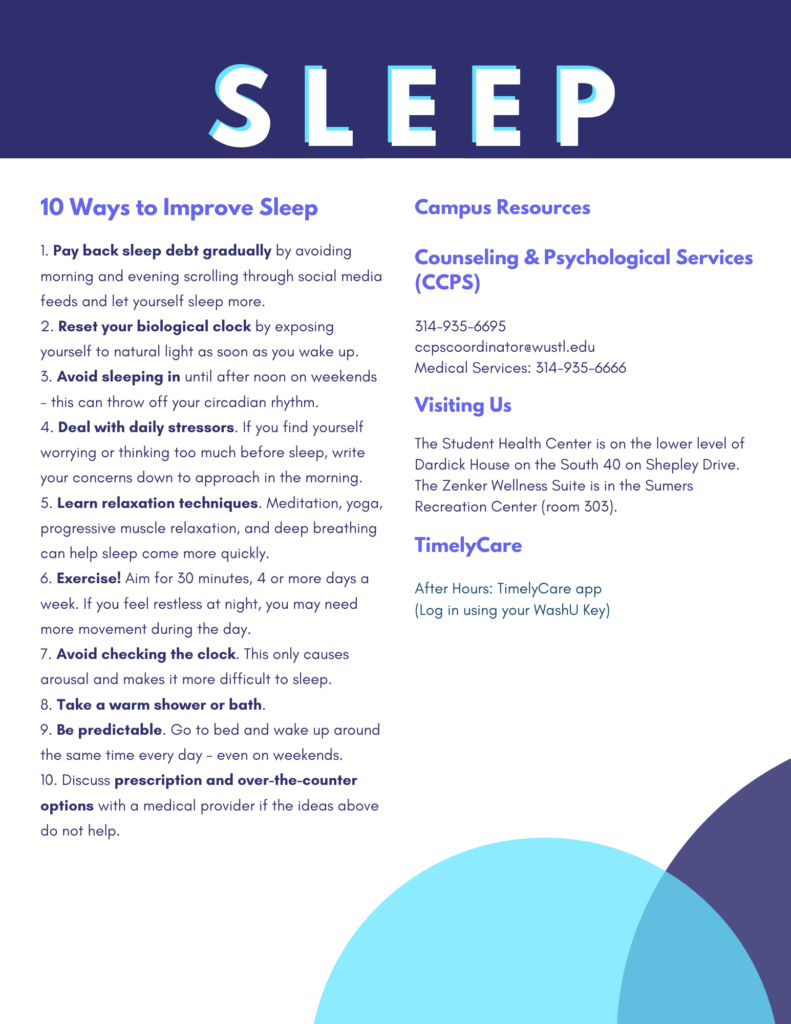
10 Ways to Improve Sleep
- Pay back sleep debt gradually by avoiding morning and evening scrolling through social media feeds and let yourself sleep more.
- Reset your biological clock by exposing yourself to natural light as soon as you wake up.
- Avoid sleeping in until after noon on weekends—this can throw off your circadian rhythm.
- Deal with daily stressors. If you find yourself worrying or thinking too much before sleeping, write your concerns down to deal with them in the morning.
- Learn relaxation techniques. Meditation, yoga, progressive muscle relaxation and deep breathing can help sleep come more quickly.
- Exercise! Aim for 30 minutes, 4 or more days a week. If you feel restless at night, you may need more movement during the day.
- Avoid checking the clock. This only causes arousal and makes it more difficult to sleep.
- Take a warm shower or bath. This nudges nighttime biochemistry along.
- Be predictable. Go to bed and wake up around the same time every day — even on weekends.
- Discuss prescription and over-the-counter options with a medical provider if you’re still struggling.
Division of Student Affairs Resources
For chronic sleep problems, you may want to consult with a psychiatrist for a medication evaluation.
Counseling & Psychological Services (CCPS)