STIs and contraception
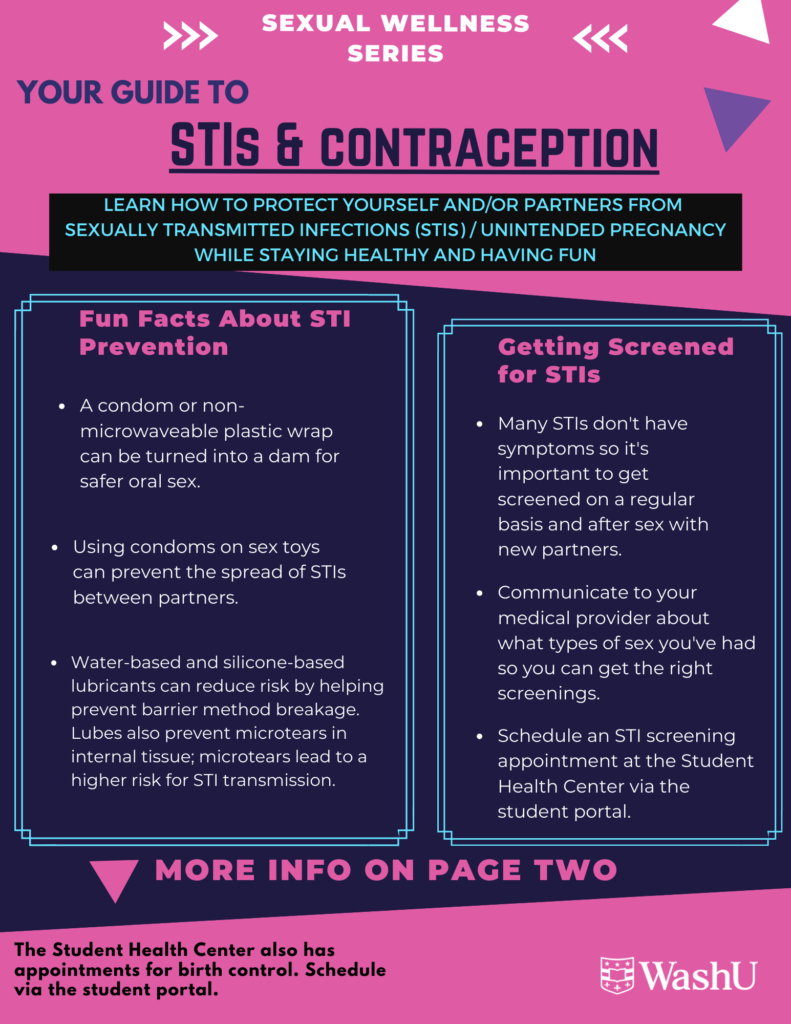
Learn how to protect yourself and/or partners from sexually transmitted infections (STIs) and unintended pregnancy while staying healthy and having fun.
STIs
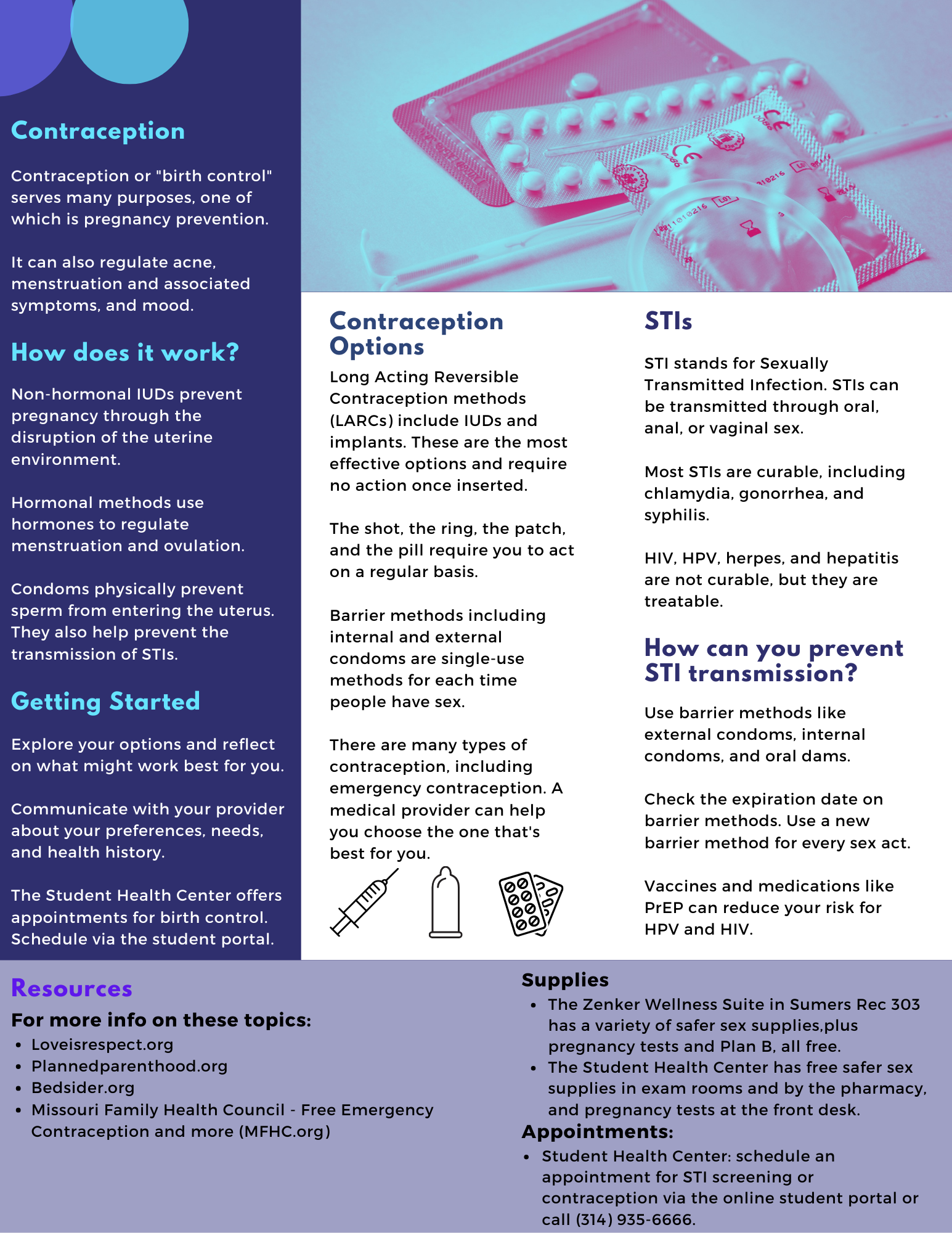
STI stands for Sexually Transmitted Infection. STIs can be transmitted through oral, anal or vaginal sex.
- Most STIs—like chlamydia, gonorrhea and syphilis—are curable.
- Some STIS—like HIV, HPV, herpes and hepatitis—are treatable, though not curable.
Preventing STI transmission
- Use barrier methods like external condoms, internal condoms and oral dams.
- Check the expiration date on barrier methods.
- Use a new barrier method for every sex act.
- Vaccines and medications like PrEP can reduce your risk for HPV and HIV.
Fun facts about STI prevention
- A condom or can be turned into an oral dam. Read this dental dam guide from the CDC for more information.
- Using condoms on sex toys can prevent the spread of STIs between partners.
- Water- or silicone-based lubricants can reduce risk by helping prevent barrier method breakage. Lubes also prevent microtears in internal tissue that can lead to a higher risk for STI transmission.
Getting screened for STIs
- Many STIs don’t have symptoms, so it’s important to get screened on a regular basis and after sex with new partners.
- Communicate about what types of sex you’ve had so you can get the right screenings.
- The Student Health Center offers STI screening appointments.
Contraception
Contraception or “birth control” serves many purposes, one of which is pregnancy prevention. It can also regulate acne, menstruation and associated symptoms, and mood.
How does it work?
- Non-hormonal IUDs prevent pregnancy through the disruption of the uterine environment.
- Hormonal methods use hormones to regulate menstruation and ovulation.
- Condoms physically prevent sperm from entering the uterus. They also help prevent the transmission of STIs.
Contraception options
There are many types of contraception, including emergency contraception. A medical provider can help you choose the one that’s best for you.
- Long Acting Reversible Contraception (LARCs) include IUDs and implants. These are the most effective options.
- People use methods like the shot, the ring, the patch and the pill on a more regular basis.
- Barrier methods like internal and external condoms are single-use methods for each time people have sex.
Getting started
- Explore your options and reflect on what might work best for you.
- Communicate with your provider about your preferences, needs and health history.
- The Student Health Center offers appointments for birth control.
Resources
Explore these topics more:
- Loveisrespect.org
- Plannedparenthood.org
- GYTnow.org
- BareMail – Free safer sex supplies
More info about birth control:
Make an appointment:
- The Student Health Center – Danforth Campus
- The SPOT (WashU School of Medicine)
View/download Guide to STIs and Contraception